Faculty Rebuilding Their Courses for the Age of GenAI
AXL Fellows are Harvey Mudd faculty and staff who commit a semester to a concrete experiment in their own classrooms—teaching with GenAI, teaching about it, examining its consequences, or rethinking assessment in its presence. Fellows receive funding and time, and share what they learn with the rest of the college.
Four Ways Fellows Approach GenAI
Fellows choose these categories when they apply. Most projects span more than one.
Using the tools in the course
Bringing GenAI into the work of the class itself—custom chatbots, AI-assisted coding, generated visualizations—while being explicit about where the tool helps and where the student still has to do the thinking.
Making the technology the subject
Teaching students how these systems actually work, what they reliably fail at, and how to use them responsibly—so fluency comes with judgment rather than blind trust.
Examining the consequences
Looking outward at policy, labor, authorship, equity, and environmental cost—the questions that decide whether the technology is deployed well, and that students will inherit as practitioners and citizens.
Rethinking assessment and practice
Redesigning how learning is measured when unsupervised work is no longer a reliable signal—in-class quizzes, oral exams, process documentation, peer review, and other structures that surface what students can actually do.
Fall 2026 Fellows
Eight faculty across mathematics, engineering, computer science, and the humanities, social sciences, and the arts—each running an experiment in a course they teach in Fall 2026.
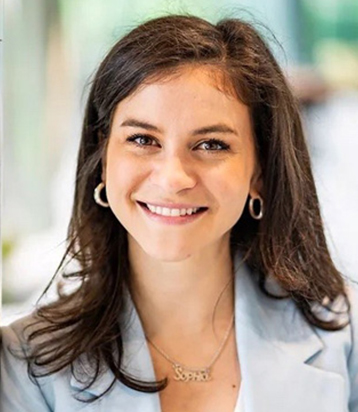
Sophia Bahena
Replacing take-home exams with scaffolded in-class quizzes every other week, alternating with student-led case studies on reaction systems and their impacts—a prototype she hopes to carry into larger core engineering courses.
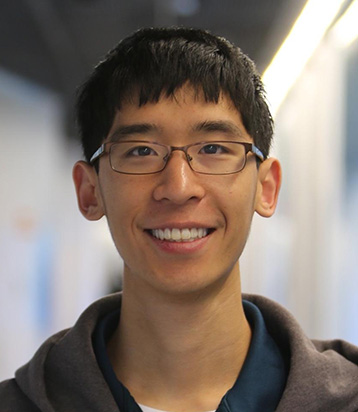
Jonathan Chang
Formalizing the lab notebook as a shared living document with visible revision history, shifting grading from generated code toward the process behind it—paired with activities that set current AI hype beside earlier hype cycles.
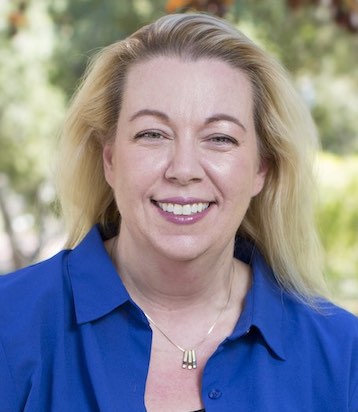
Lisette de Pillis
Retiring take-home midterms and finals for six short in-class quizzes, each followed by an anonymous live “solution swap” in which students grade a classmate's work against a rubric—restoring a reliable signal while building evaluation skills.

Harrison Li
Running an IRB-exempt randomized study in which group oral quizzes are AI-enabled or not, testing whether GenAI helps or hinders understanding—and moving the course's data work onto a server-side Positron environment with an AI assistant whose use students must log.
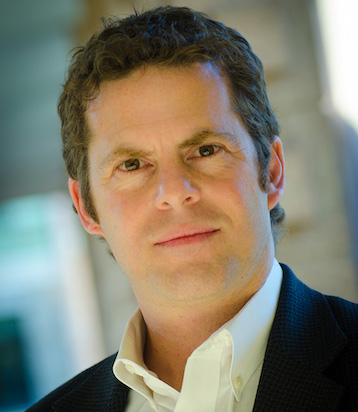
Paul Steinberg
Adding AI governance to a seminar that launched just before the technology took off—surveying how countries regulate AI, assembling a week of readings, and bringing in a guest speaker who works on AI and policy.
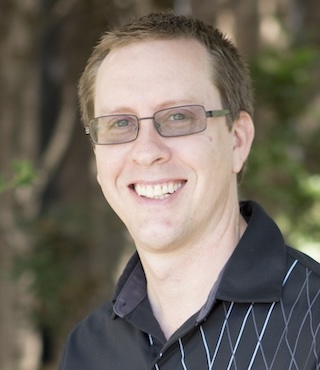
Chris Stone
Devoting four Clinic sessions to using coding assistants responsibly and well: what these tools are doing to software practice, plus exercises like generating code in one session and returning three weeks later to see who can still explain it.
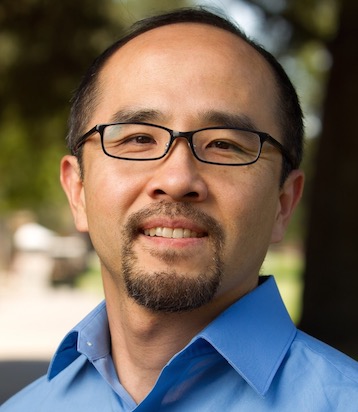
Francis Su
Building slider-driven visualizations for a course whose textbook has no pictures, letting students manipulate the critical steps of key proofs and form their own conjectures—alongside a policy that permits AI for learning but not for homework.
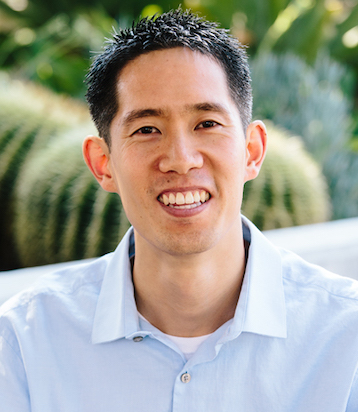
TJ Tsai
Developing a chatbot tuned to a course's learning objectives that helps students and shows the instructor where understanding is breaking down while there is still time to respond.
Past Fellows
The work of earlier cohorts continues in the courses they redesigned. Fellows remain part of the AXL community and help shape what the lab takes on next.
Spring 2026
Inaugural cohort · 10 fellows
Albert Dato
Explored AI as both a learning tool and a study in multimodal limitations in Materials Engineering, with structured pre/post-test homework and image-accuracy exercises.

Vivien Hamilton
Rethought the History of Modern Science course to center AI in computing history, and developed handwritten assessments that minimize GenAI misuse.

Eduardo Ibarra Garcia Padilla
Redesigned a computational physics course around an in-class proficiency exam to verify coding competency in the presence of GenAI tools.

Lynn Kirabo
Created a GenAI critiques module in climate justice courses where students examine AI's impact on disabled communities through speculative fiction and prototyping.
Harrison Li
Integrated GenAI-assisted coding into Introduction to Probability and Statistics, teaching students to use and verify LLM-generated R code while preserving conceptual understanding.

Rachel Mayeri
Redesigned Digital Cinema and created a Nonhuman Media Art course with reflexive, process-oriented approaches to GenAI in media production.

David Seitz
Replaced the final paper in HSA10 “Race, Gender, and Class through Star Trek” with blue book exams in response to GenAI-driven changes in student writing.

Sarah Stefanos
Incorporated GenAI critique into a “Sociology of Waste” course through group projects on AI-driven waste processing, consumer apps, and the cognitive effects of overuse.

Daniel Tamayo
Used GenAI to rapidly build interactive HTML visualizations for an astrophysics survey course, letting students explore stellar and atmospheric physics.

Kyle Thompson
Taught an “AI and Ethics” course in which students conducted in-class Turing tests, analyzed GenAI-generated philosophical papers, and critically examined AI's societal impact.
Interested in becoming a fellow?
Fellowships are offered each semester to faculty and staff across Harvey Mudd College. Tell us about the course you want to rethink.
Get in Touch